
A New Chapter Begins
There is a moment—quiet, almost reverent—when a patient sees their new smile for the first time. At Crown Dental Care, we have always believed that moment should feel like a miracle. Now, with the arrival of the Tupel 3D Implant Photogrammetry Scanner, we can also prove, with millimetre-level precision, that it is one.
Photogrammetry—the science of extracting three-dimensional measurements from photographs—has long been used to map mountains, reconstruct archaeological sites, and guide aerospace engineering. Today, Crown Dental Care brings this same extraordinary technology into the dental surgery, giving our patients something they have never had before: absolute certainty about every implant, every angle, every millimetre of their new full-arch smile.
This is not an incremental upgrade. This is a paradigm shift—and Crown Dental Care is leading it.
CLINICAL INSIGHT
Traditional impression methods carry an inherent margin of error. The Tupel 3D scanner reduces implant position deviation to within microns—making fit errors in full-arch prosthetics a thing of the past.
What Exactly Is the Tupel 3D Scanner?
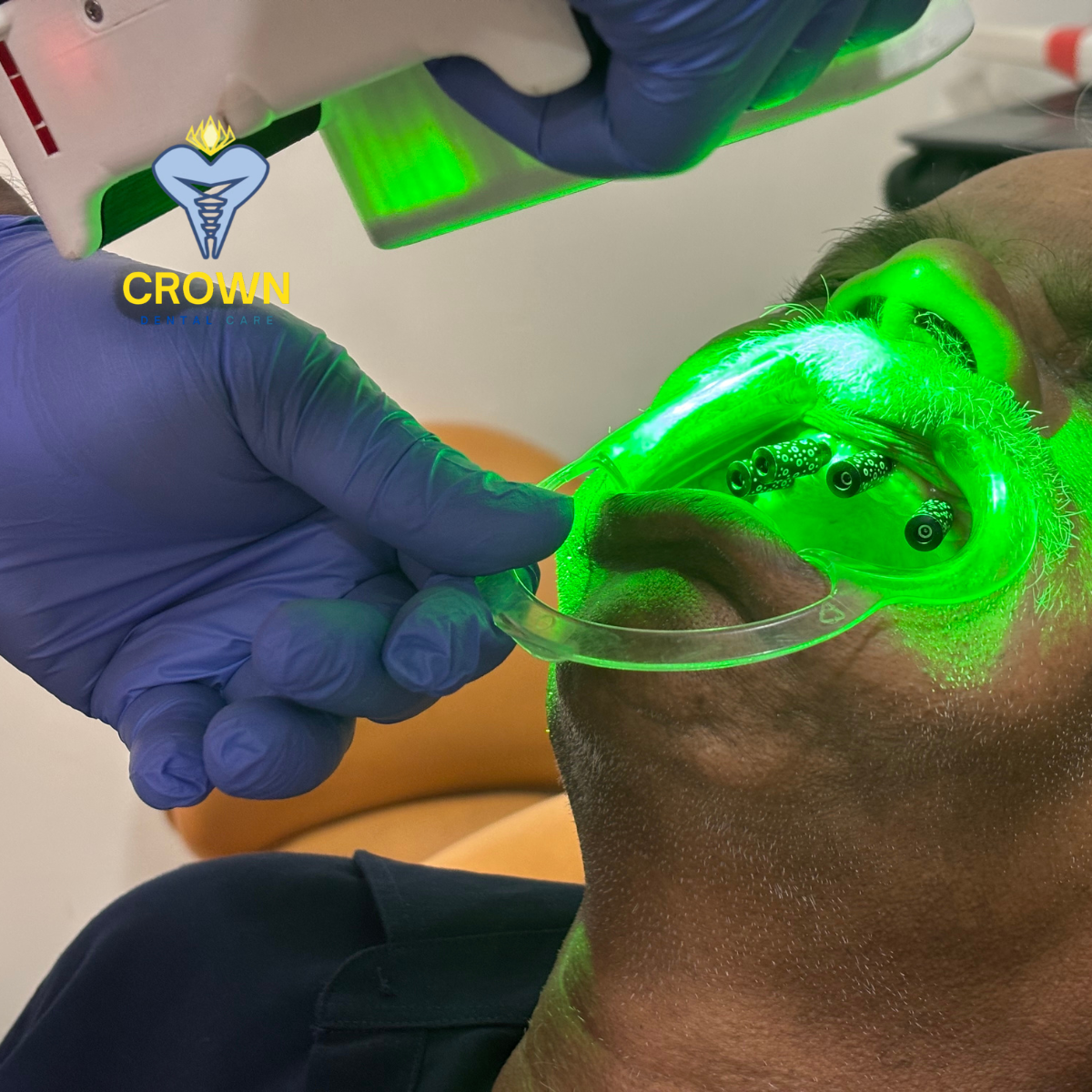
The Tupel 3D Implant Photogrammetry Scanner is a purpose-built optical measurement system designed exclusively for implant dentistry. Unlike conventional intraoral scanners that rely on contact-based surface mapping, Tupel 3D uses photogrammetric principles—capturing hundreds of calibrated images from precisely calculated angles to reconstruct the three-dimensional position of every implant in the arch with extraordinary fidelity.
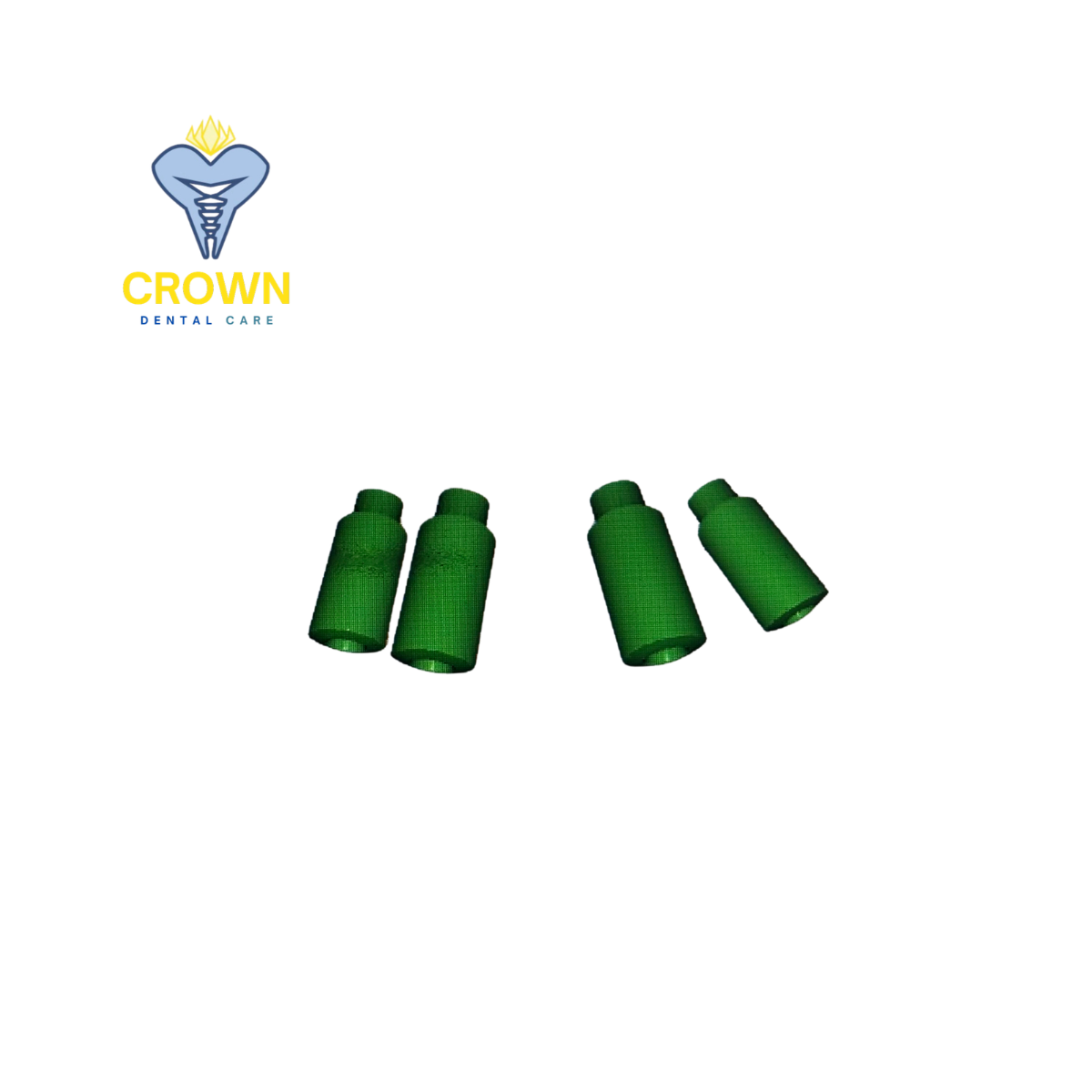
The system works by attaching small, engineered scan bodies to each implant. These scan bodies carry unique coded targets that the Tupel camera reads simultaneously, computing their spatial relationships in real time. The result: a digital master model of your implant positions that is so accurate, the laboratory can fabricate your prosthesis without ever needing a physical impression.
Key Technology Features
- 📐 Geometric Precision: Sub-20 micron accuracy—less than the width of a spider silk strand—across the entire arch.
- 🌐 True 3D Spatial Data: Unlike intraoral scanners that stitch 2D images, Tupel captures absolute three-dimensional coordinates, eliminating cumulative stitching errors.
- ⚡ Instant Digital Transfer: Scan data is transmitted digitally to laboratory partners, slashing turnaround times.
- 🔄 Fully Repeatable: Every scan is archived, creating a permanent, tamper-proof record of your implant positions.
- 🦷 Patient-Friendly: No messy impressions. No gagging. No discomfort. Patients simply open, we scan, and the data is captured in minutes.
All-on-4 & All-on-6 — Mapped With Zero Compromise
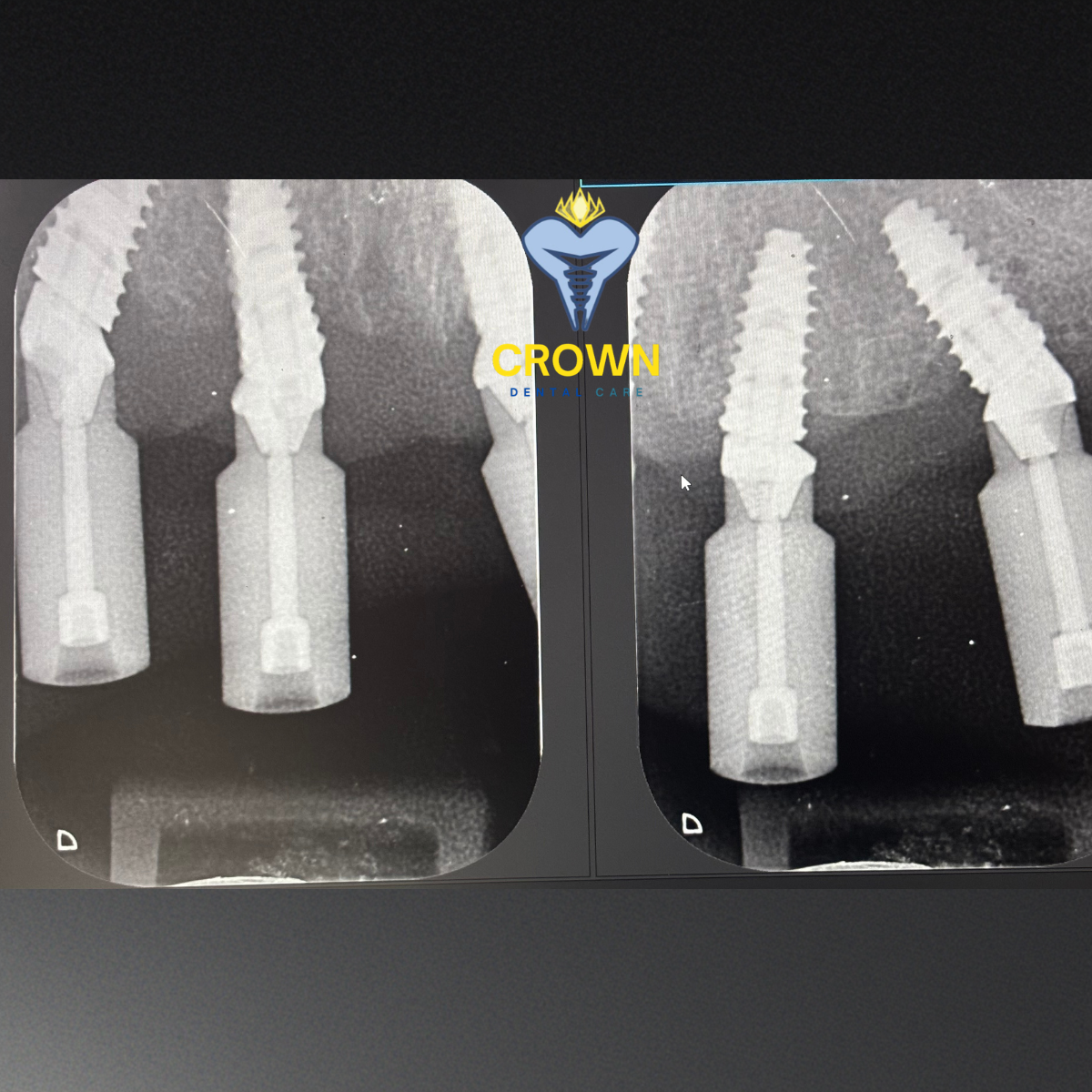
Full-arch implant restorations demand absolute precision. Now, Crown Dental Care delivers exactly that for both flagship procedures.
All-on-4™
Captures all 4 implant positions simultaneously—no sequential stitching errors. Tilt angles are reproduced to within fractions of a degree in the digital model, ensuring the prosthesis fits passively on first placement with no chairside adjustments.
All-on-6™
Six-point spatial mapping eliminates arch distortion in wider jaws. Greater distribution of masticatory load is backed by precision-fit prosthetics, providing exceptional long-term stability for patients with heavy occlusal demands.
Why Accuracy Is Everything in Full-Arch Implants
A full-arch implant bridge is not a simple dental restoration. It is an engineering structure—one that must distribute enormous biting forces across multiple implants, integrated into living bone, for decades. The consequence of poor fit is not aesthetic inconvenience. It is mechanical stress on the implants, bone resorption, screw fractures, and potential failure of the entire restoration.
Traditional impression materials, however carefully handled, deform. They expand, contract, and introduce distortions. With Tupel 3D photogrammetry, distortion is impossible by definition. Light does not deform. The mathematics do not lie.
The Patient Journey: From First Scan to Transformative Smile
Precision Is the Highest Form of Care
At Crown Dental Care, we have always believed that the most powerful thing we can offer a patient is not just a beautiful smile—it is absolute confidence in the work behind it. The Tupel 3D Implant Photogrammetry Scanner represents everything we stand for. It is obsessive about accuracy. It refuses to guess. It turns artistry into science and science back into art.
- 🏆 Gold Standard Protocol: Tupel 3D photogrammetry is internationally recognised as the most accurate implant capture method available.
- 🤝 Seamless Lab Partnership: Digital precision from chair to lab means our technicians work from truth—not interpretation.
- 📊 Documented Outcomes: Every scan is a permanent clinical record, enabling ongoing monitoring and true continuity of care.
Ready to experience dental care that misses no detail?
Your New Smile Deserves This Level of Precision.